Saatsine
Yaalk'ali
Rating:
3L - 2S - 3V
| Discord Tag: Tag Immediately
Hunter
Profile Pages

History
Runs with...
‣ night shadow (6.13.21-3.20.25)
‣ saatsine (5.12.25-current)
‣ night shadow (6.13.21-3.20.25)
‣ saatsine (5.12.25-current)
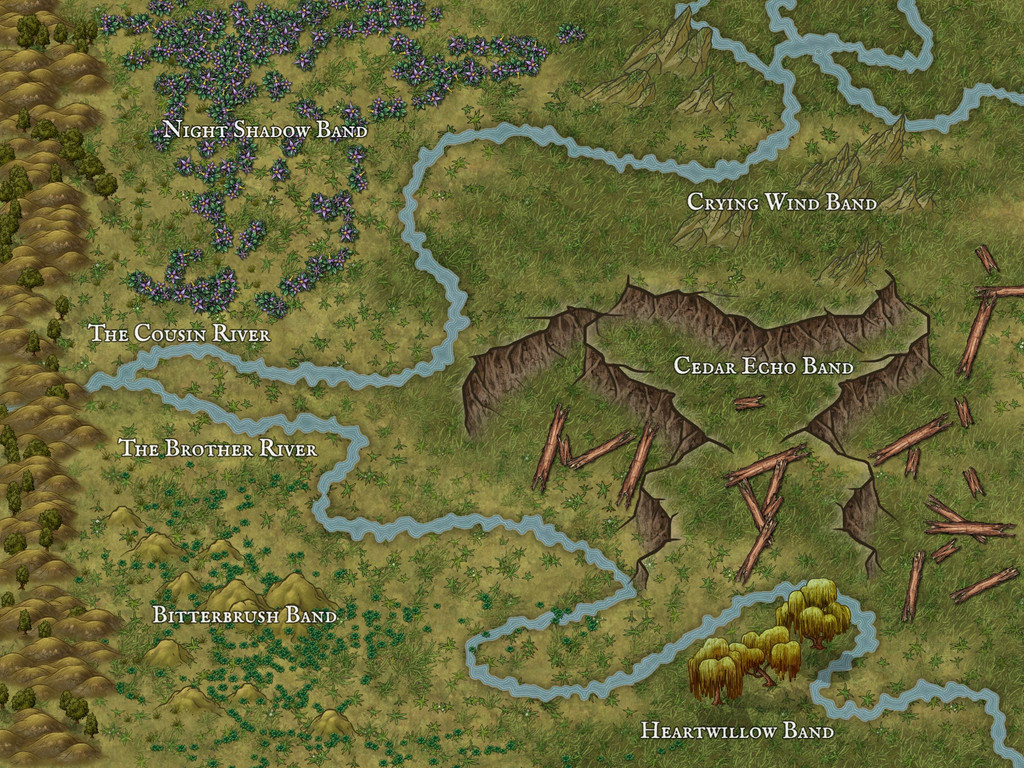
— map by caligulista
The Night Shadow Band
CULTURE
A band named for the night shade that blooms in abundant vibrance through their base camp. This, and the shadow which metaphorically looms over, as they are known for their worship of their dark deities, making of toxins and common sacrifices.
Their Ghost Talkers are renowned, as well as their herbal art, specifically to the night shade scattered throughout their land used for both medicine, poison and visions from the spirits. Many are wise to not take food from the night shadow band for trade, but instead furs, herbs, treatments and even talismans made of bone, tooth and horn.
BELIEFS
The night shadow band acknowledges the same deities and spirits as all other individual bands of Lanzadoii. However their attention and devotion lies to a specific few, those happening to be more of darker nature for which the night shadow band believes to be greater then their lesser counterparts.
Ice raven — Prominent trickster deity and world creator among the Lanzadoii who can demand levels of cruelty from his followers. Taking any action in the name of ice raven is favored if the hunter discovers a physical token immediately after said action. For example, killing in the name of ice raven and then discovering a piece of white stone or a red feather would mean that your action has been sanctioned, as white and red is sacred colors among Lanzadoii.
Kigun, “fang” — The horned spirit of wild animals, ferality, and the hunt. He is believed by many to be a great horned beast, a white stag by the night shadow, symbolizing nature’s wild forces.
Aasrivak, “the widow” — A spiteful deity of battle, fate, and death, often appearing as a raven or in the form of a spider. Feared and respected, she embodies the chaos of war and the certainty of death.
Tupilaq, "the vengeful one" — A evil spirit to remind all of the harshness of the tundra plain and that survival means to work as a group. This spirit feeds on hatred and fear. It is said to hunt down and punish those who hunt alone at night. Some believe in the night shadow band's ability to summon the vengeful one to hunt down those that have done them injustice. Its said to be seen only as a dark shadow which shrieks like a banshee.
RITUALS
— Blood bonds, also knowns as a "blood oath", is the practice of cutting paws and mixing blood to signify everlasting loyalty. Breaking a blood bond for any reason is punishable by death.
— At the beginning of each year's long march, as large sacrifice is made to the widow, said to keep death at bay (or minimal) on their travels. Sacrifices are not to be eaten and are often poisoned by night shade for those who disrespect this.
— To become considered a veteran hunter among the night shadow, you must succeed the night hunt. After ingesting a nightshade tea, one must successfully hunt a caribou on their own and return by dawn. Those who don't return are said to have been taken by the vengeful one.
— Sighting a white stag is seen as a visit of Kigun. No hunting or spilling of blood of any kind is allowed this day, as it is signified as a day of peace and rest.
— During the long march, night shadow band does not recover or even bury their dead. They remain where they had fallen, cursed to rot where they had fallen and failed. To do so would be to risk their weakness finding it's way onto yourself.
— Lanzadoii and associated cultures created by caligulista