Guest
Tianlong

Summary
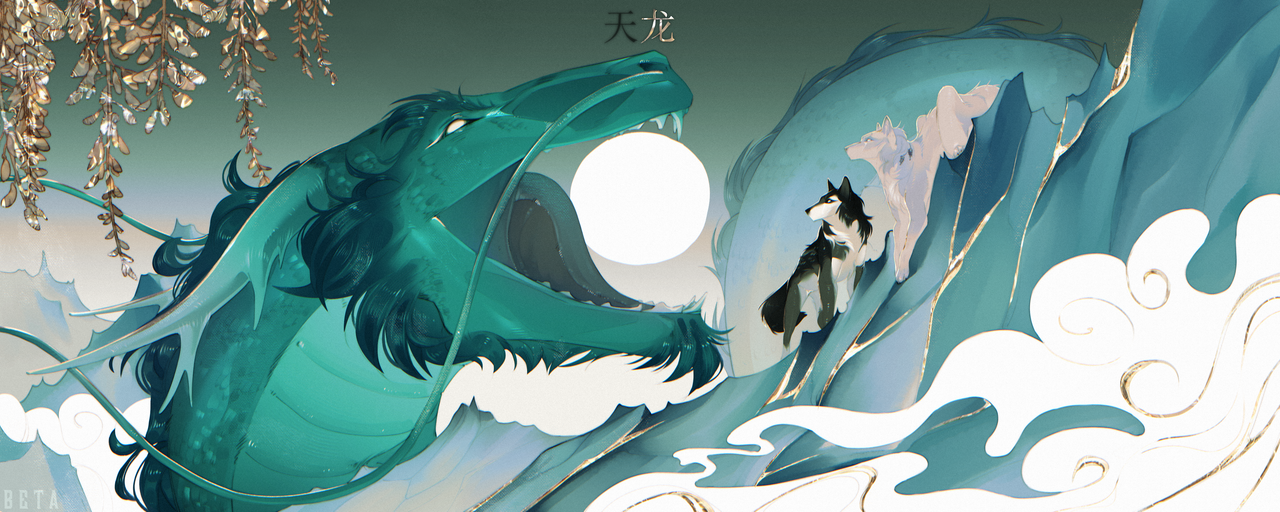
An ancient imperial order built on the ideals of faith, discipline, and divine right, the Tianlong Dynasty mirrors the grandeur of feudal China. Believing themselves descendants of the Celestial Dragon, the Dynasty's royal family rules through the sacred Mandate of Heaven.
Current Event
None

An ancient imperial order built on the ideals of faith, discipline, and divine right, the Tianlong Dynasty mirrors the grandeur of feudal China. Believing themselves descendants of the Celestial Dragon, the Dynasty's royal family rules through the sacred Mandate of Heaven.

To the Dynasty, outsiders are treated with polite suspicion at best and quite disdain at worst. To earn acceptance, a foreigner must undergo The Trials of Heaven—a series of symbolic and spiritual tests that strip away their former identity and forge them anew beneath divine rule. Success grants them a new name, a place among Heaven’s flock, and the right to call themselves Tianlong-ren (“People of the Heavenly Dragon”).

Within their ranks, etiquette is law and loyalty is devotion; every movement, from a bow to a battle, is considered art. Warriors fight as poets, scholars pray as soldiers, and even mercy is a political move for clout.

For those who seek structure, beauty, and the weight of tradition, the Tianlong Dynasty offers purpose beneath Heaven’s order. For those who crave freedom… it offers only judgment.

FOUNDED
12.13.2025
28 𓃥   1 𓃓
14 ♂   15 ♀
Lawful Good


HISTORY HERE

Lorem ipsum dolor sit amet, consectetur adipiscing elit. Etiam porttitor finibus justo sed dictum. Lorem ipsum dolor sit amet, consectetur adipiscing elit. Mauris cursus velit sed lectus consequat, a ultricies nisl dictum. Nulla id arcu in nunc gravida sollicitudin at vel orci. Donec sagittis pharetra enim ut porta. Mauris nec urna iaculis, pulvinar enim ut, ullamcorper est. Suspendisse hendrerit tempor orci a pulvinar. Morbi vel mauris odio. Pellentesque ac nisi nec nisi cursus fermentum vitae tincidunt sapien. Mauris id sapien euismod, iaculis felis eget, ullamcorper neque. Suspendisse consequat lacus quis risus feugiat, vel rutrum quam luctus. Integer rutrum suscipit massa at hendrerit.

Nunc nec nisl ultricies, condimentum sapien at, ultricies ante. Sed imperdiet eros ut risus consequat, a fermentum risus tincidunt. Sed elit eros, tempor vel pellentesque quis, aliquam ut diam. Nulla malesuada congue mi, sed faucibus urna ornare nec. Sed quam erat, mattis vitae ante eu, auctor rhoncus lorem. Sed vestibulum vel magna eget ultricies. Duis luctus leo vitae augue faucibus, vel blandit metus volutpat. Proin commodo maximus nibh, vitae placerat quam scelerisque sit amet. Phasellus laoreet mi quis ipsum interdum, vitae posuere dui gravida.

Vivamus iaculis turpis tellus, vitae finibus quam efficitur sed. Nullam ac egestas turpis. Ut eros ante, imperdiet non nunc id, elementum auctor nisl. In vitae purus at augue sodales convallis vitae nec nisl. Nulla mollis elit laoreet, tempor ex fringilla, interdum ante. Quisque at ipsum at odio rutrum pretium. Nam sit amet nunc sit amet metus interdum pharetra. Nullam ullamcorper pulvinar odio vitae gravida. In eu ipsum sit amet enim malesuada ultricies sit amet sit amet eros. Interdum et malesuada fames ac ante ipsum primis in faucibus.

CAMHANAICH
Relation
Thoughts
DAWNBREAK
Relation
Thoughts
ELYSIUM
Relation
Thoughts

JAKTEN
Relation
Thoughts
KINGDOM OF AVON
Relation
Thoughts
NORTHFALL
Relation
Thoughts

SAATSINE
Relation
Thoughts
SATRIYA
Relation
Thoughts
Skjǫldrheim
Relation
Thoughts


T H E L A W S O F H E A V E N

The Emperor’s word is law.
No wolf may speak against or disobey Heaven’s Fang. His command is considered the voice of Heaven itself.

The Empress is to be revered as Heaven’s Mercy.
Her decrees carry equal weight in domestic and spiritual matters. To defy her is to reject Heaven’s compassion and mercy.

Hierarchy is divinely ordained.
Every wolf knows their station and must act within it. To challenge one’s superior without sanction is considered treasonous behavior.

The Mandate of Heaven may be revoked.
Should the Emperor become corrupt, the ancestors may withdraw Heaven’s favor, as evidenced by famine, storms, or eclipses. Only then may rebellion be justified—through divine sign, and not personal ambition.

The bloodline of the Celestial Dragon is holy.
Royals, their offspring, and kin are to be treated with reverence. No wolf of lower birth may touch, bite, or shed their blood without divine trial.

Intermingling of ranks is forbidden without consent.
Courting or breeding across tiers without approval from the Council or Empress and Emperor is punishable by exile or sterilization.

Children are the empire’s legacy.
Pups of all tiers must be nurtured, trained, and protected, no matter their blood. Neglect or harm toward the young is a crime of the highest order within the Dynasty.

H I E R A R C H Y

The Tianlong hierarchy is currently separated into three primary categories, which continue to split into role-specific ranks:

Royalty and the Imperial Harem
Emperor (Heaven’s Fang):
The supreme ruler of the Dynasty and Heaven’s living voice on earth. The Emperor’s word is law, their existence is believed to maintain balance between the mortal and celestial realms. Only death or divine intervention can unseat them.

The Imperial Harem is a collection of consorts, mistresses, and concubines bound to the Emperor’s household. Their roles range from companionship to political leverage—gifts from foreign clans, noble families, or rival provinces seeking favor.

Empress (Heaven's Mercy):
The Emperor’s wife and second in command within the court. She oversees the Imperial household, the harem, and internal affairs. Her influence shapes the moral and spiritual integrity of the Dynasty, and she is expected to be both virtuous and cunning.

The Huanghou:
Consorts that had the task of advising the empress.

Sun Consort (Heaven's Heart):
The Emperor’s most favored consort and often the heart of the inner palace. She wields significant soft power through her relationship with the Emperor, acting as confidant and emotional anchor. Her status depends entirely on favor — a fragile but powerful position.

The Concubines:
Lady of Beauty (美人; měirén)
Lady of Gentleness (良人; liángrén)
Learned Lady (八子; bāzi)
Harmonious Lady (七子; qīzi)

Golden Kin:
Extended members of the Imperial bloodline — uncles, aunts, cousins, nieces, and nephews. They often hold honorary titles or regional authority.

Crown Heir:
The designated successor to the throne. The Heir is trained from youth in diplomacy, philosophy, and war.

Imperial Children:
The sons and daughters of the Emperor, each born beneath immense expectation. Though not all will inherit the throne, their marriages and alliances often decide the future of the Dynasty.

Elders & Matrons:
All retired men & dowager mothers of the Emperor, Empress or other royalty.

The Servant Class:
Shanggong (palace servants):
Personal guards & sentries

Shangfu (personal attendants):
Helps with all personal services, from bathing to food

Shangshi (food service):
Handled offerings and the reception of guests

Shangyi (ceremonial service):
Arranges the banquets & ceremonies


The Imperial Justice System
Dragon Guard:
Elite protectors stationed within the palace grounds. They are to protect the royal family from both inside and outside threats. They are chosen from the most disciplined soldiers in the empire.

Captain of the Dragon Guard:
The leader of the elite guard sworn to protect the Emperor and Royal Family. Personally chosen by the Emperor, they command both respect and fear.

Imperial Headsman:
The Emperor’s appointed executor of justice. They perform executions and corporal punishment of criminals.

Prisoners:
Those awaiting trial, punishment, or execution. Some are political prisoners or failed nobles.

Icognito Branch:
These individuals usually live double lives. They have a front as one role, but really, they lurk the corridors at night and know everyone's secrets. They answer to no one but those who hire them — or the Emperor himself.

Spymaster:
A master of whispers. The spymaster understands that all is rarely as it seems, and heads a small network of whisperes that keep the dynasty informed.

Assassins:
They kill in the cover of night, whiping out threats with a silent strike.

The Jade Council:
The Emperor’s inner circle of advisors. Comprised of ministers overseeing Martial Law, Faith, Diplomacy, and Labor. They interpret Heaven’s will and ensure its reflection in all affairs of the state. Third in command to both the Empress and Emperor.

Lords/Ladies:
Lords and Ladies of the Dynasty.

Academic Chairs:
Those who are in charge of the care and education of all dynasty children. Royal children are assigned individual tutors.

Court Physician:
Healer to the Emperor and nobility, trained in medicine. Their art balances life and death as Heaven commands it. They are usually experts in the healer class skill tree.

Magistrate of Ceremonies:
Spiritual leaders of the Dynasty. Their job is to reaffirm the Emperor's divine right. They uphold the sancitity of The Five Rites of Breath and The Book of Tèng.

Master of Ceremony:
They interpret omens, oversee major rites, oversee Trials of Heaven, and advise the emperor. They are usually experts in the seer class skill tree.

Sages & Acolytes:
Tends to work in tandem with healers for spiritcraft. Servants of the faith who conduct minor rituals, prepare offerings, and assist priests. Conducts rituals, helps High Priests/Priestesses conduct rituals and rites, and helps observe Trials. Helps train Acolytes.

The Serfs
Offices of the Spring (The Healing Branch)
Aestheticians:
These tradesmen deal with the procurement & application of various dyes & perfumes. Braiding services are sometimes offered, should the creature be deft enough.

Medics & Apprentices:
Common healers serving soldiers, travelers, and the poor. Skilled in herbal medicine and healing rituals. Includes Students of the healing arts, guided by masters in the art of healing.

Offices of the Summer (The Martial Branch)
Imperial General:
Commander of the Dynasty’s armies and guardian of its borders. The generals lead armies, maintain border security, and train officers. They are usually experts in the warrior class skill tree. Their word is law on the field.

Imperial Soldier & Apprentices:
The heart of the army—trained warriors sworn to the Emperor's and the Dynasty’s defense. The highest ranking soldiers are the officers, mid-level leaders who oversee platoons and manage discipline among troops.

Offices of the Autumn (The Hunter Branch)
Master Huntsman:
Leader of the Dynasty’s hunters. Provides food and conducts ceremonial hunts honoring the Celestial Dragon, the Emperor, the royal family, and the Dynasty as a whole. Trains other Hunters. They are usually experts in the hunter class skill tree.

Trackers & Apprentices:
Experienced trackers responsible for feeding the court and maintaining the natural order through controlled culls. Also includes scouts and novices who assist senior hunters and learn the craft.

Offices of the Winter (The Diplomatic Branch)
Envoy & Attachés:
Ambassadors representing the Dynasty in foreign courts. They negotiate trade, alliances, and peace treaties. They are usually experts in the orator class skill tree. Attachés are Assistant diplomats, interpreters, or scribes who accompany envoys. They learn diplomacy through observation and service.

Messenger:
Carriers of messages and decrees. Their reliability and discretion are vital, for their words can shift alliances.

R E L I G I O N

A sea of silence devoid of both life and death existed before Heaven was given a name and the stars learned to shine. Two forces emerged from that primordial emptiness: Baixue, the White Crane, born of light and wind, and Tianlong, the Celestial Dragon, born of thunder and cloud.

Coiled through the heavens, the Dragon carved rivers with his tail and made mountains with his scales. While he slept, the land beneath him solidified into continents, and when he roared, storms were created. Despite being divine, the Dragon’s strength was wild, untamed, and cruel in its isolation.

The Crane danced among the Dragon's storms as it landed on the newborn world. Her song mellowed the thunder, and her wings brought gentle breezes instead of gales. Flowers grew where her feet touched the ground, and rivers flowed cleanly where her tears fell. Because the Dragon's fire scorched everything he loved, she felt sorry for him, considering he had made a world in which he could not live in.

In the ages that followed, the Crane sought to teach the Dragon balance. “Power without restraint,” she said, “is not creation, but ruin.” The Dragon, proud and unyielding, resisted her words. He believed might alone would bring harmony. Yet every time he raged, the Crane would rise into the storm and sing, and her song would weave through his lightning until it softened into rain.

At last, the Dragon grew weary of her defiance and descended upon the earth to challenge her. They battled for a thousand days and a thousand nights — sky against wind, flame against water. The heavens burned red, and the seas boiled with their fury. But when dawn finally came, neither had won. The Crane stood wounded yet unbroken, and the Dragon lay exhausted yet alive.

In that silence after the storm, the Dragon saw for the first time how the world bloomed in the wake of their struggle. From the ashes of their battle, forests had grown. From the clash of their powers, new life had been born. And he realized the Crane’s truth: to create is not only to rule but to nurture.

The Dragon bowed to the Crane and vowed to guard her teachings. In return, she placed her beak upon his brow and granted him serenity—the gift of sight beyond wrath. From that day forward, the two became one in purpose.

Together, they brought harmony to Heaven and Earth. The Dragon shaped the seasons with his breath, while the Crane guided their rhythm with her dance. The Dragon carried the sun across the sky, while the Crane drew down the moon. Their love, though never spoken, was eternal—a devotion that became the foundation of all balance as we know it.

It is said that their union birthed the first emperors—mortals touched by Heaven’s grace—who ruled not by power alone but by the combined harmony of strength and wisdom. The Dragon gave them sovereignty, and the Crane gave them the virtue to rule. From their union, the Tianlong Empire was born.


(#49695C)

The priests of Tianlong teach that the Dragon represents strength, justice, and divine authority, while the Crane embodies compassion, purity, and truth. Together, they symbolize the eternal balance between action and stillness, destruction and creation, and between masculine and feminine energies, Heaven and Earth.

To favor one over the other is to bring imbalance, and imbalance leads to ruin. Thus, the dynasty honors both: the Dragon through discipline and duty and the Crane through mercy and mindfulness.

The faithful also follow what they call the Five Rites:

1. Creation
— to build, to nurture, to bring forth life.

2. Destruction
— to burn away what no longer serves.

3. Silence
— to listen, to think, to understand.

4. Offering
— giving something of yourself without expecting anything in return.

5. Balance
— to walk between all these things and not lose your way.

(#49695C)

Religious and Public Ceremonies
Rituals and ceremonies are often situational or depend on the time of year.

Public Spaces & Altars for Ceremonies
The ancestral temple is the most sacred “public” space — though restricted to the ruler and nobility, its symbolism affected the whole realm. Even though commoners couldn’t enter, the ceremony’s effects were “public” — the entire realm’s harmony was renewed through it.

Royal processions, festivals, and proclamations were performed in broad open spaces — city squares, great avenues, or marketplaces. These were times when the ruler appeared “to the people” — displaying benevolence, conferring amnesties, or celebrating victories.

All members are encouraged to maintain Personal Altars or to create Public, Community Altars. Villagers gathered to pray for a bountiful harvest, fertility, and communal well-being. They embodied harmony between Heaven, Earth, and the people.

Seasonal Ceremonies
Spring Ceremonies:
Drafting of Beauties:
Candidates, often from noble families, were evaluated based on their virtues and physical condition and selected to enter the Imperial Harem. Those chosen to become empresses and higher-ranked consorts had a proper marriage ceremony; a woman entering the harem as a concubine did not.

Emperor's Birthday & Fertility Blessing:
A festival is held to honor the Emperor and his lineage. The dynast takes part in activities such as discussing sutras, creating dedicated art, and staging elaborate birthday celebrations and gifts to honor her. At the same time, couples can come forward and seek breeding approval for the next year; afterwards, the couple will be assigned to a physician to ensure the healthiest dynasty cubs.

Summer Ceremonies:
Coming-of-Age Rites:
Young wolves approaching one year of age dress formally during a ceremony. After an elder places the symbolic item on their shoulder, they complete ritual bows, and the adult confers an adult name and announces their assigned office. Young women are formally introduced to society. This is accompanied by strange hazing tactics,such as pulling out a tooth, or (more commonly) dyeing one's teeth.

Worship of the Ancestors:
Ancestors' spirits still exist and can bless or bring disasters. During this solemn gathering, everyone worships in the hope that their ancestors will bless them for a better life. One could communicate with heaven through offerings and rituals, thereby creating a strong connection between the present and the past, especially within family lines.

Autumn Ceremonies:
Matchmaking Ceremony:
This is the second-largest event of the year, after the Emperor's birthday. Young women of the court train all year for this event. They begin meeting with the Empress after their Coming of Age ceremony, and continue through their second birthday when they enter proper breeding age. During the ceremony, the eligible women are dressed as opulently as possible, and their marriage pairing is announced before the entire dynasty. The marriage is then held later on, privately, amongst the married families and the magistrate of ceremonies.

Autumn Festival & Grand Hunt:
Held several weeks after the Matchmaking Ceremony, when the moon is at its biggest, as a way to celebrate prosperity. It is a day of repose: At dawn, solemn rites and offerings were performed to give thanks for abundance; by midday, the court departed to the open plains for the ceremonial hunt. Those who stay back are entertained by spoken poetry and song.

Winter Ceremonies:
Lunar New Year:
The Royal Family hosts a large celebration full of food, fermented drink, and entertainment. Earlier in the year, the Empress chose a married couple to perform the Dragon's Dance — a heartbreaking rendition of the love between the Crystal Dragon and the Crane. Privately, wolves engage in housecleaning, sprinkling herbs for good luck, staying up all night, and telling stories. Gifts are given copiously, especially in the color red.

Worship of the Heavens:
On the day of the winter solstice, the Emperor himself worships the heavens in front of an audience. He then offered sacrifices and prayed for a good harvest for his country the next year. During prosperous years, this is often accompanied by a feast.

As Needed Ceremonies
Auspicious Rites:
Tea Ceremonies & Banquets celebrate good events & serve to bless whatever event it is honoring. Three meats are served: the deer, the fish, and the boar. Here, there is an emphasis is on the reciprocity of etiquette rather than on dining. The guests of honor may drink to their heart's desire at banquets.

Inauspicious Rites:
Inauspicious ceremonies were carried out when sad things occurred, mainly funerals but also when disastrous events had befallen a family, or in the occurrance of natural disasters, military defeat, or rebellion. The activities mostly consisted of public offerings & sacrifice.

Rites of War:
Ceremonies were held to unify the state, consisting of: ceremonies for military review, declarations of war, the dispatch of armies, reports of victory & the presentation of booty and captives & triumphant returns.

Death Rites:
Nobility:
Objects of the imperial household were considered to be court property, so when the nobility dies, treasures are returned for reassignment to another woman of similar status. Widows are expected to remain chaste after their spouse's death.

Officers:
Funerals for soldier and officers were very formal. The fallen's peers guide the prepared& decorate body to the burying place and all in attendance participat in the burial. Then there's the presentation of condolences during a memorial ceremony.

Births:
Three Days after birth, the child receives various gifts expressing wishes for good health and prosperous life.

At Sixty Days After Birth, the child is given a name.

When the child reaches six months old, the Zhuazhou rite is performed where parents place various items in front of their child and observe which item the child picks up. This predict the child's future luck or destiny.


“The bamboo that bends is stronger than the oak that resists.” — Japanese proverb.

P A C K   N E W S
winter year 2

00.00.0000"Thread Title"
Thread Blurb

12.13.2025"Kingdom Come Deliverance: Eploration I"
The Tianlong Dynasty has been established, founded in Verdant Grace by Shēnléi, Daiyu, Fen, Kexin, Tòuyǐng, Yuè, Yunxu and Xiaobo.

R O Y A L   D E C R E E S
12.15.2025
Thou must do as I say.

12.15.2025 * A C T I V E
Thou must work rain or shine.

12.15.2025
Thou must not loiter.
三人一条心,黄土变成金


Colours: #a7c7a3 > #1f5f4e
To include:
Founder headshots
Banner of the dragon
Ranks
Alliances
History
Pack news
Royal decrees
Pack statistics
— Job board
— Territory map
— Trials, who are due to do their trials, who has completed xyz etc
— Culture
— Ettiquette


Code by Sauwce
BannerDivider
